

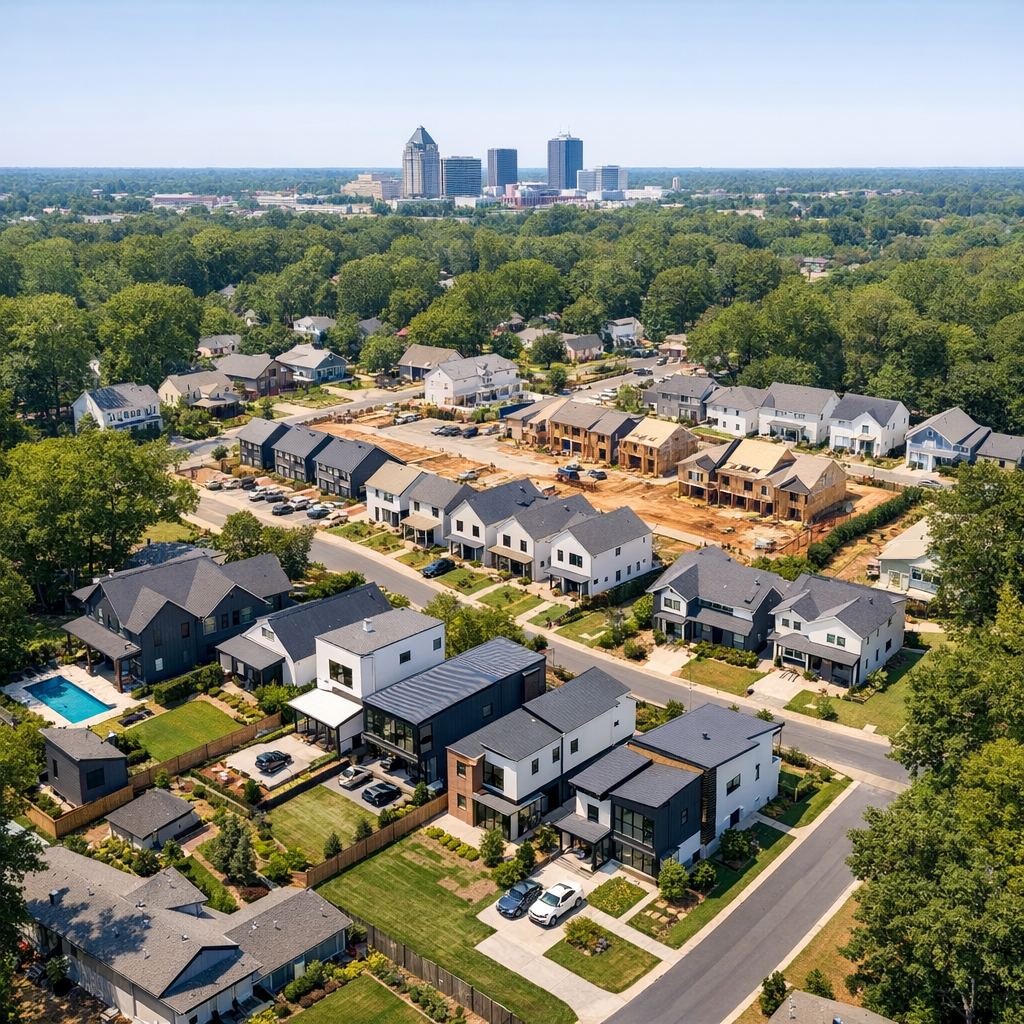
Greensboro’s housing market is experiencing notable shifts, presenting both challenges and opportunities for residents and prospective homeowners. Understanding these trends is essential for making informed decisions.
Current Market Trends
As of early 2026, the median sale price for homes in Greensboro stands at $303,000, reflecting a 5.2% increase from the previous year. Homes are typically on the market for about 65 days, indicating a balanced market where neither buyers nor sellers have a distinct advantage. The number of homes sold has decreased by 19% year-over-year, suggesting a cooling in demand.
Rental Market Insights
The rental sector mirrors this stability. The average rent in Greensboro is approximately $1,381 per month, with a modest 2.9% increase over the past year. This gradual rise indicates a steady demand for rental properties, offering consistent opportunities for landlords and renters alike.
New Developments and Housing Initiatives
To address the growing need for affordable housing, several new developments are underway. Notably, the Grayson at Randleman Crossing and Overland Place Apartments will add 132 high-quality, affordable homes to the community. These projects aim to provide housing options for families across a broad range of incomes, from those with very limited earnings to those closer to the local average. Construction is expected to begin in 2026.
Additionally, Crosspointe Homes has launched Canter Park, a residential community offering modern homes starting in the upper $200,000s. Strategically located near expanding employment markets, Canter Park aims to support the region’s workforce and housing goals without compromising on amenities or design.
Opportunities for Buyers and Renters
For potential homebuyers, the current market conditions suggest a favorable environment with a variety of options and relatively stable prices. The increase in inventory provides more choices, and the balanced market dynamics mean that buyers can negotiate effectively.
Renters can also benefit from the steady rental market, with new developments expanding the availability of affordable housing. The gradual increase in rental prices indicates a healthy market without rapid inflation, making it a suitable time for securing rental agreements.
Conclusion
Greensboro’s housing market is evolving, with new developments and stable market trends offering opportunities for both buyers and renters. Staying informed about these changes is crucial for making strategic decisions in this dynamic environment.